

Summary: LinkedIn remains the world’s largest professional networking platform, with more than 1.2 billion users as of late 2025. It’s the first place investors, journalists, job seekers, and business leaders look to learn about executives. A polished, complete LinkedIn profile helps executives tell their professional story, strengthen their personal brand, set an example for their organization, and ensure they can be easily discovered online.
LinkedIn remains the most powerful and important B2B platform for professionals
I have been surprised by the number of clients who have asked me this question: “Why should my CEO and senior executives be on LinkedIn?” To me, it seems self-evident: As a professional, LinkedIn is the primary way to make connections and brand yourself online.
But some senior executives still treat their LinkedIn profiles with what could charitably be described as benign neglect.
In this blog post, I will explain:
- What LinkedIn is and why it’s important
- Why the C-suite should take LinkedIn more seriously
- What best practices are for LinkedIn profiles
- The importance of engagement
- Which metrics to track to evaluate your progress
What Is LinkedIn?
LinkedIn is the world’s largest professional network on the internet, with 1.2 billion users and over 310 million actively monthly users as of late 2025, according to DemandSage. In short, it’s a social media platform that acts as a professional networking site, designed to help people make business connections, share their experiences and resumes, and find jobs.
LinkedIn is similar to other social media sites like Facebook. It’s built around:
- linking to friends (or, in the case of LinkedIn, “connections”)
- posting updates
- sharing content
- liking and commenting on others’ posts
- direct messaging other users
LinkedIn also introduced a button that will summarize long posts into a few key bullet points tailored for each user. For example, a sales professional will receive a different summary than a stockbroker.
LinkedIn, while not as ubiquitous as Facebook or Instagram, is nonetheless important in the business community:
- LinkedIn has more than 1 billion users
- 257 million active members in the US
- 80% of LinkedIn users drive business decisions
- 98% of LinkedIn users have a post-secondary education
Why the C-Suite Should Be Active on LinkedIn
As the only network devoted specifically to businesspeople, LinkedIn is unique among social media channels. Here are the primary reasons executives should be active on the platform:
- People will always be looking for you: Whether they are peers, investors, journalists, job seekers, or potential business partners, LinkedIn is the first place people look to learn about other professionals.
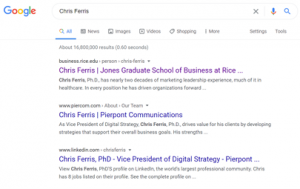
- LinkedIn helps people find you: Due to Google’s search algorithms, often it’s someone’s LinkedIn profile that people see near the top of the results when they look online:
- Your LinkedIn profile tells your story and cements your professional brand: Your LinkedIn profile tells a story about you. And you have 100% control over what your LinkedIn profile says and tells people about you. It’s a remarkable opportunity to tell your own story and brand yourself professionally.
- You set an example: A company’s top executives are usually its most visible individuals to the rest of the world. And internally, their actions set an example for the entire organization to follow.
In short, a polished digital presence that tells your story and is easy to find should be a top priority for all executives.
Executive Profile Best Practices for LinkedIn
- Compelling Background Picture: Background images set the tone for your profile, allowing you to convey a message about your executive brand and the company you work for.
- Profile Picture: Choose a professionally taken photo that is clean and clear of any distracting background noise.
- LinkedIn provides photo guidelines for background and profile images
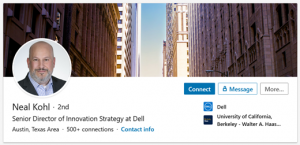
- Headline: Carefully write your profile headline to communicate not just your job title, but your areas of expertise and other positions you may hold.

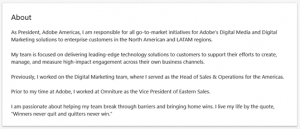
- About: Your LinkedIn summary is a condensed version of your executive resume. Select and use keywords to ensure your profiles show up in searches for your areas of expertise. A brief and well-written About section is a must for senior leaders and executives.
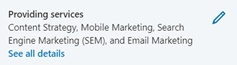
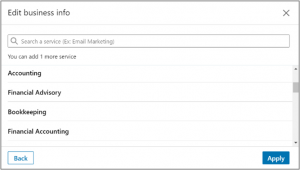
- Services: These are keywords that LinkedIn uses to index your profile and show it to other LinkedIn users when relevant. LinkedIn allows up to 10 services, so take advantage of as many as suit your profile.
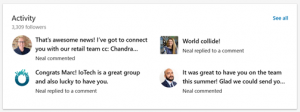
- Activity: Being active on LinkedIn will help your name—and your business’ name—be more visible online. Also, linking, commenting, and sharing helps you expand your online and establish connections with others in your industry.
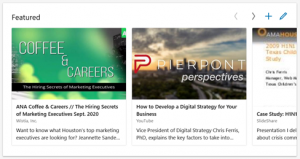
- Featured: This section allows LinkedIn members to highlight select posts and add links to external websites, webinars, news stories, images, or videos. It’s a helpful way to highlight mentions of yourself across the internet.
- Skills: Add (and regularly update) up to 50 skills; prioritize the ones most aligned to your leadership narrative and your company’s positioning.
- Verification Badge: Executives should verify their profiles when eligible; it’s a visible trust marker and increasingly common.
- Custom URL: Make your public profile URL clean and consistent for press bios, speaking pages, and email signatures.
LinkedIn removed the Creator Mode on/off toggle and also removed profile hashtags from the intro section (beginning Feb 2024). Most creator tools remain available, but optimization should focus on your headline, About, Featured, and consistent posting—rather than profile hashtags.
Engagement on LinkedIn is a Two-Way Street
In addition to updating your LinkedIn profile page, it’s also important to engage on LinkedIn. Specifically, this means:
- Interact with other professionals on LinkedIn, including:
- Commenting on their posts
- Sharing their posts
- Reacting to their posts
- Connect with peers or other professionals in your industry
- Accept connection requests – but be judicious about which ones
- Post valuable content from trusted sources, like newspapers, magazines, and trade journals
- Nurture relationships with your network by introducing people to one another and making business connections
- Keep it positive and professional:
- Don’t treat LinkedIn like Facebook: it’s a network built and designed for professional topics
- Think of LinkedIn as a professional networking event
- Don’t criticize others; spend your time finding articles or individuals to praise and highlight
Individually, each of these best practices is important. But taken together, they will add up to a far more robust, complete, and compelling LinkedIn profile.
What To Measure
But how can you tell if your new and improved LinkedIn profile is working? In addition to the number of connections and followers (which are different), here are a few metrics to keep an eye on by accessing your Dashboard:

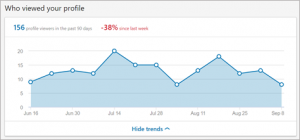
- How many profile views do you have over time? This number will not likely continually rise, but a steady stream of profile views means you’re visible on LinkedIn:
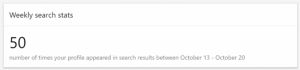
- Search appearances are an indicator of the number of times your profile appeared in search results in the last week. This is largely driven by what people on LinkedIn are searching for, but it’s another number that you’d like to see remain relatively steady, if not grow.
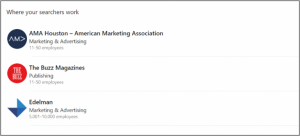
- Where your searchers work lets you know if your profile is showing up in the search results of people who work at businesses that you want to connect with and have been seen by.
- Keywords your searchers used to identify whether you’re showing for the appropriate search terms. If not, you should consider revising your job title, headline, and about section.
FAQs about LinkedIn and Executives
- Why is LinkedIn so important for CEOs and senior executives? LinkedIn is often the first place people search when evaluating a professional. With more than 1.2 billion users, it provides unmatched visibility and allows executives to control how their story and expertise are presented online. In short, an executive’s profile is a trust signal
- Do executives really need a 100% complete LinkedIn profile? Yes. A incomplete or out-of-date profile incomplete profile suggests a lack of digital fluency or attention to detail. On the flip side, a fully optimized profile acts as an SEO anchor, ensuring ensure they appear prominently in online search results. And, more importantly, a LinkedIn profile allows senior leaders to write their own narrative, strengthen brand presence, and increase credibility
- What elements of a LinkedIn profile matter most for executives? High-impact items include a professional profile photo, a compelling background banner, a clear and strategic headline, and an “About” section that tells your professional story. These help shape first impressions and enhance discoverability.
- How does an executive’s LinkedIn presence influence their company? Executives are often the most visible representatives of the business. Their online profile and narrative can set the tone for an organization, influence company culture, and enhance a business’s external reputation and credibility.
- What are the biggest missed mistakes executives make on LinkedIn? The biggest mistake is neglecting the platform entirely or failing to update it regularly. This can create outdated impressions or make it hard for stakeholders to understand their expertise and leadership story. Not commenting on current industry news and adding insights misses an opportunity for thought leadership.
- Is LinkedIn only useful for job seekers? Not at all. For executives, LinkedIn is primarily a leadership, visibility, and reputation‑building platform, not a job-hunting tool. It’s a vital space for storytelling, networking, and thought leadership.
- What if an executive thinks they are too busy to keep up with LinkedIn? While many executives have busy schedules, a best practice is to set aside 15 minutes a couple of days every week to like, comment or share on LinkedIn. Alternatively, some executives empower one of their communications team or an outside agency to manage their profile for them.
Summary
In sum, think of LinkedIn as a virtual networking event. If you show up to an in-person event in casual clothes, standing in the corner, not wearing a name tag, and not talking to anyone else, you won’t have a successful and productive time.
But if you dress in industry-appropriate clothes, wear a name tag, engage with other attendees, and look up from your phone, you’ll make interesting and potentially meaningful connections. Updating your LinkedIn profile and engaging on the platform with some regularity is the online equivalent of preparing and acting appropriately at a networking event or conference.
Your LinkedIn profile is a virtual—and very visible—representation of you, your professional brand, and your business. So treating your profile with the same care and attention you pay to yourself is worth the time and effort, especially for senior business executives.
LinkedIn Premium, which offers subscriptions that start as low as $34 per month, is primarily used by job seekers, recruiters, and sales professionals. Unless you fall into one of those categories, it is likely not worth the subscription cost.
**Updated January 23, 2026**