
Summary: AI can make communications more efficient, but it’s important to leave human expertise and judgement at the center. Key takeaways include:
- Human review remains essential: AI can assist with research and preparation, but media pitches still require a personal touch.
- AI is a tool to streamline, not a substitute for strategy: AI can free up time, allowing you to focus on strategy, counsel and relationship building.
- Earned media matters even more in AI search: Credible earned media coverage and clear, well-structured content can help increase a brand’s visibility in AI-generated search results.
AI Should Be Used as an Accelerant, Not as a Replacement
AI will not replace the people who do communications well. It will give them back the hours they need to do it better.
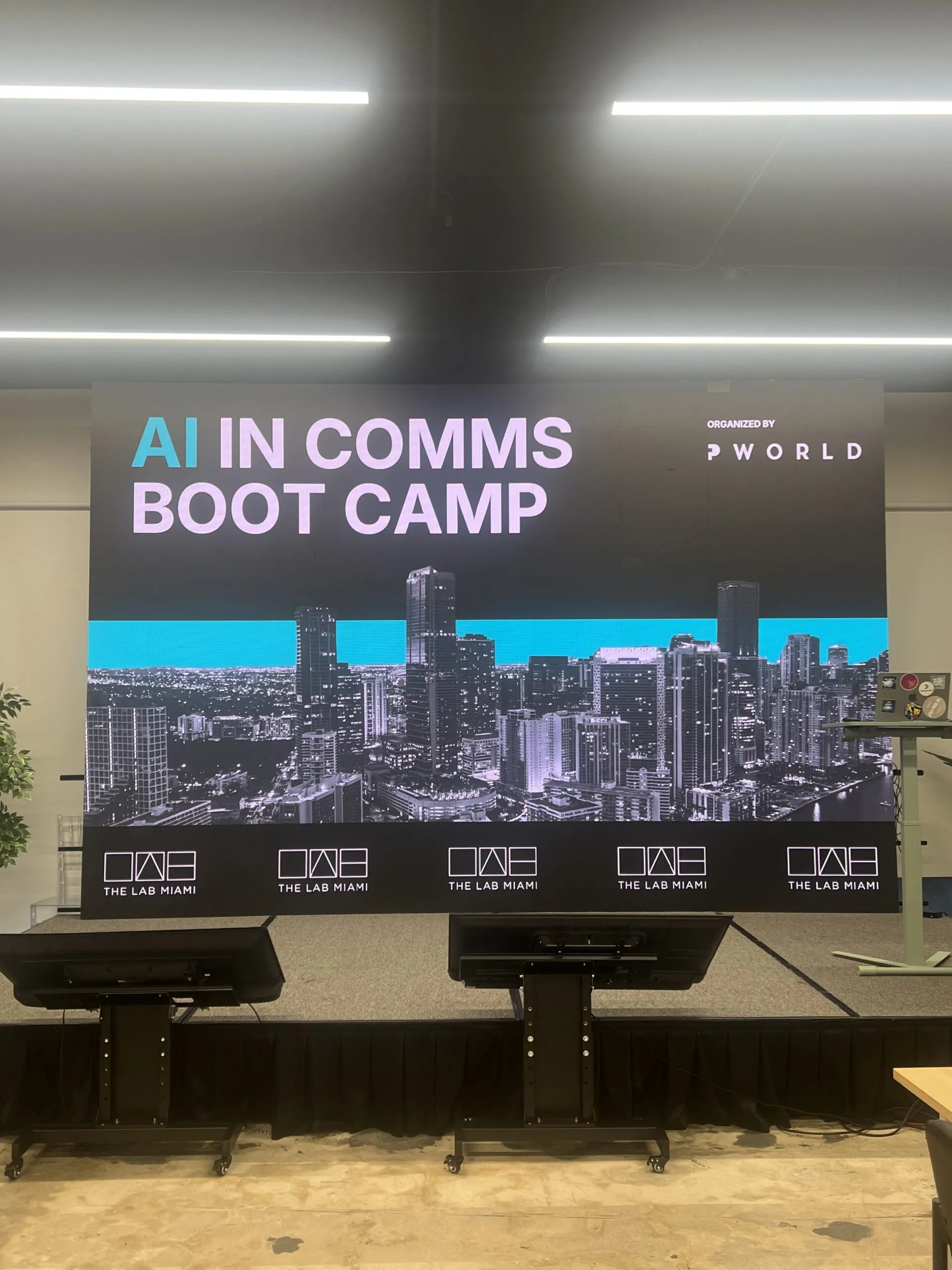
That was my biggest takeaway from the AI in Communications Boot Camp I attended in Miami. Over two days, I joined communications professionals from corporate, healthcare and agency backgrounds to hear from industry leaders, including speakers from Amazon, DHL and Yale School of Medicine, about how they’re incorporating AI into their daily workflows.
Here are a few key takeaways on how AI can enhance our work while keeping human expertise at the center.
The Human Element Remains Essential
Kelly Nantel, Amazon’s Director of Global Operations and Workplace Reputation, summed it up: “AI is an accelerant, not an autopilot.” Communications still depends on timing, tone and reading the room. The core of the job is judgment, context, empathy and relationships.
Consultant Chris Gee put a number on it: AI gets you about 75% of the way, at best. The last 25% is judgment, and that part is yours. No tool knows your audience the way you do, or can decide in the moment how to reframe a storyline when a reporter calls.
That theme came up in every session. Amazon used AI to translate internal videos into employees’ native languages, cutting annual translation costs by 98%, but real people still reviewed every version to make sure it was accurate and would actually resonate with the intended audience.
Yale School of Medicine learned the same lesson. When the team tested an AI sensitivity check on 3,200 research summaries, it flagged 2,900 of them. The solution wasn’t more automation. They rebuilt the process so an editor and the faculty author approve every summary before it publishes.
A key media relations takeaway: AI can assist with research and preparation, but media pitches still require a personal touch. Reporters recognize generic outreach, and strong relationships are built on trust.
AI is a Tool to Streamline, not a Substitute for Strategy
One question that stood out to me: Where are you spending time on tasks that don’t require your full expertise? That’s where AI can add value, freeing you to focus on strategy, counsel and relationship building.
Some of the most practical uses we discussed:
- Pressure-testing messages. Asking AI to play the toughest audiences in the room, such as a skeptical reporter, a cautious client approver or an opposition researcher, so you can find the weak spots before a statement goes out.
- Research and media prep. Scanning what reporters are covering and how they tend to frame a story.
- Staying on brand. Feeding AI your best past press releases to build a style guide it can follow, plus a list of tired “AI words” to avoid.
As one speaker noted, you can get tremendous value from AI without ever letting it write a word for you. Ask it what you’re not considering. Use it to challenge your thinking, then make the call yourself.
The advice on getting started was refreshingly practical: don’t start with AI, start with the work. Find a real problem, test a small solution, learn from it and build from there.
My Favorite Takeaway: Automate the Routine
The idea I’ve already started putting to use is scheduled tasks. Instead of prompting AI each time you need something, you set up a recurring task once and it runs on its own: every weekday morning, every Monday, whenever you choose.
For example: “Every Monday through Friday at 7:00 a.m., send me a visual briefing on communications news related to AI and the workforce, with a short ‘why it matters’ for each item.” What once required time each morning is now delivered automatically, allowing me to start the day informed and focused on higher-priority work.
Chanele McFarlane, who runs her own daily and weekly briefings this way, offered a simple test for what to automate: what do you repeatedly check, search, summarize, prepare or analyze?
Practical applications for communications professionals include:
- Daily coverage roundups on a client’s industry or competitors
- Weekly idea starters for social content
- Tracking a topic you want to keep an eye on over time
Why Earned Media Matters Even More in AI Search
Another important takeaway for PR professionals: AI is changing how people find information, and earned media is at the center of it. Instead of clicking through search results, people increasingly get a summarized answer from an AI tool. Matt Zuvela of DHL Group noted that those tools lean on a few trusted, credible sources, which means earned coverage now feeds the answers people see.
Yale School of Medicine saw this firsthand. After restructuring its research summaries so AI tools could easily read and cite them, the number of summaries cited in Google’s AI Overviews grew from one to seven in five months. Credible earned media coverage and clear, well-structured content can help increase a brand’s visibility in AI-generated search results.
The Bottom Line: Human Expertise Still Matters Most
AI offers tremendous opportunities to work more efficiently, strengthen our research and challenge our thinking. The real value comes from using that extra time to focus on what matters most: developing thoughtful strategies, providing sound counsel and building meaningful relationships.
The technology will continue to evolve, but the fundamentals of effective communications remain the same. Understanding your audience, exercising sound judgment and building trust will always matter.